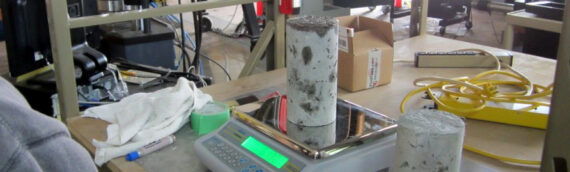
Concrete is a structural material which consists of Portland cement, aggregate (sand and rock), and water (to make the chemical reaction called hydration occur). The strength and other properties of concrete are dependent on how these four ingredients are proportioned and mixed. Concrete can sometimes contain other substances, such as fly ash from industrial smoke stacks, which can change its properties.
Concrete is a very strong material when it is placed in compression. It is, however, extremely weak in tension. It is for this reason that we use reinforcement in concrete structures. The reinforcement, which is usually steel, takes up the slack for the weakness of the concrete in tension.
There are many ways to test the strength of a batch of concrete. At Sorlabs we perform both destructive and nondestructive tests. Compressive Strength, Cement/Chloride Content, Petrographic Analysis, Unit Weight, Aggregate Analysis, Forensic Studies, Floor Flatness are, just to name a few, some of the tests we regularly perform…
Usually when a batch of concrete is ordered on a job site it is specified to be of a specific compressive strength — 4000 psi, for instance. The ready-mix concrete batch samples placed in 6 inches in diameter and 12 inches in height cylinders are cured for 28 days and tested by compression until they are crushed. We compare that value to the design value used to make sure that the structure was constructed properly.
Once the concrete is placed for a particular structure, we perform nondestructive test to estimate the strength of the concrete. This method uses a Schmidt hammer (also called a Swiss hammer).
- Compressive Strength
- Tensile Strength
- Mix Design
- Coating and Toppings
- Physical and Chemical Cement Properties
- Properties and Performance of chemical and mineral admixtures
- Cement/Chloride Content
- Petrographic Analysis
- Unit Weight
- Aggregate Analysis
- Forensic Studies
- Floor Flatness

 Sorlabs’ expertise in soil testing is making sure construction sites have firm foundations.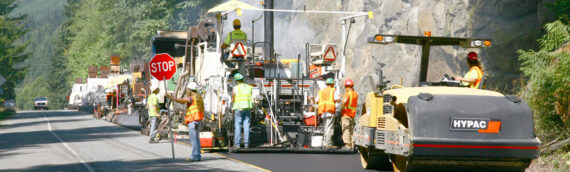
 The ability to test the physical properties of asphalt materials is a vital step toward improving the performance and durability of roads and highways.